Task 01


For Task 1, we learned the basics of Lectra Modaris through tutorial videos provided by Dr. Alshaimaa on the MyTimes app. In the videos, Dr. Alshaimaa explained the software features step by step, including how each tool functions and how to apply them in digital pattern making. After watching the tutorials, we practiced using a shirt block and sleeve block that were provided.
We were required to create our basic blocks and three design variants. I started with a front shirt variant and a cargo pocket, then continued with two sleeve variants, followed by combining the front shirt and sleeve patterns. This process was quite challenging for me because I had no prior experience using Lectra Modaris. Unlike manual pattern drafting, the digital interface required a different way of thinking and working.
I had to rewatch the tutorial videos multiple times to understand the steps clearly. In addition, there were technical difficulties as the computer kept hanging, and I lost my work twice because I did not save it in time. This was frustrating and stressful, especially since the software is detailed and time consuming to redo. Many of my classmates faced similar issues and were unable to complete the task within the given time.
Fortunately, Dr. Alshaimaa gave us an extension, which allowed me to redo the work carefully and manage my time better. I made sure to save my progress frequently and follow the tutorial more systematically. In the end, I was able to complete all the required variants before the deadline.
Reflection
This task taught me that digital pattern making requires patience, accuracy, and good time management. Although the learning process was difficult at first, it helped me understand how digital tools are used in the fashion industry. The challenges I faced pushed me to be more independent and persistent. By the end of the task, I felt more confident using Lectra Modaris and more prepared for future pattern technology work.
Task 02
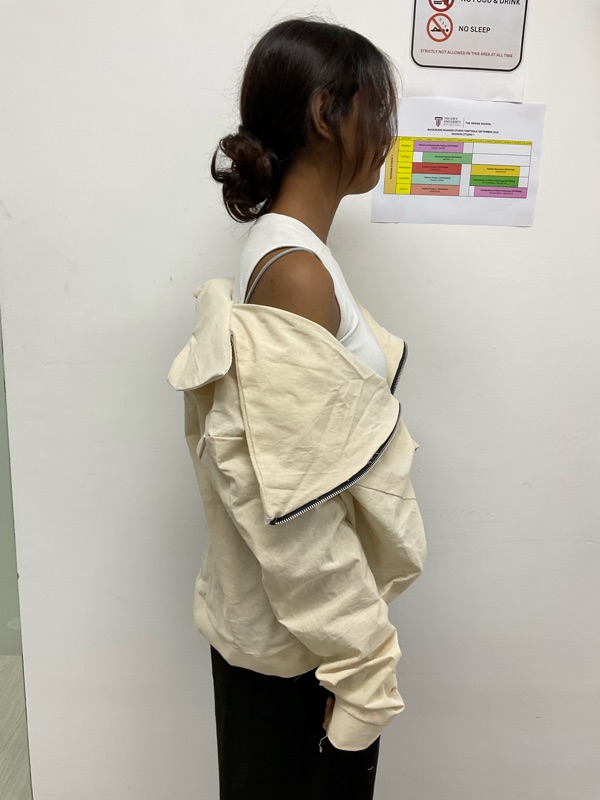
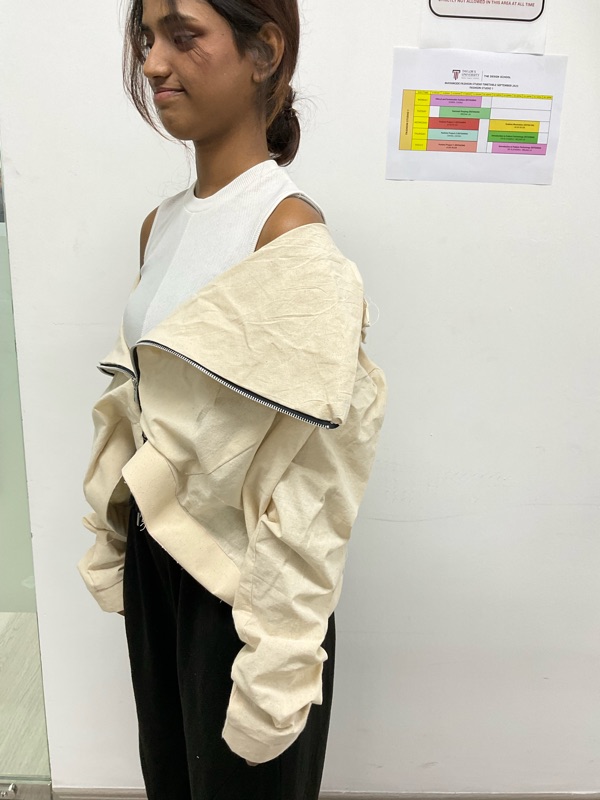
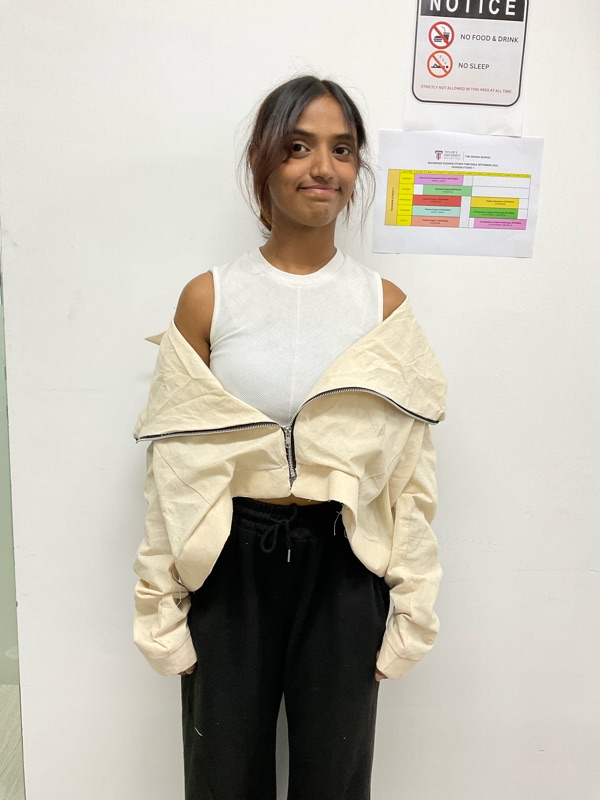
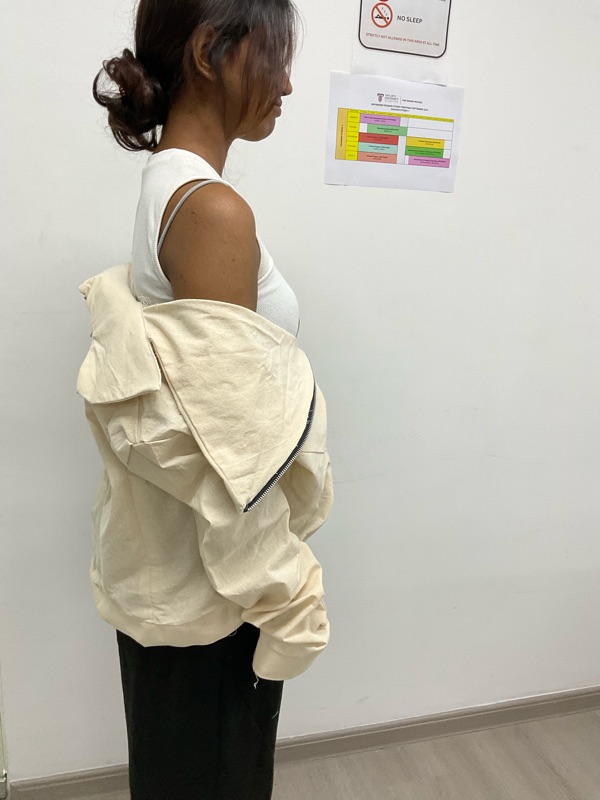
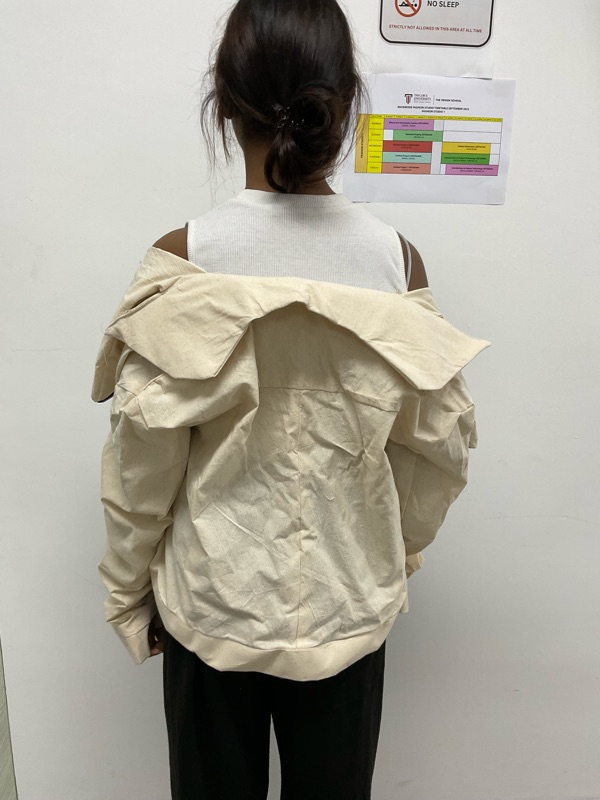
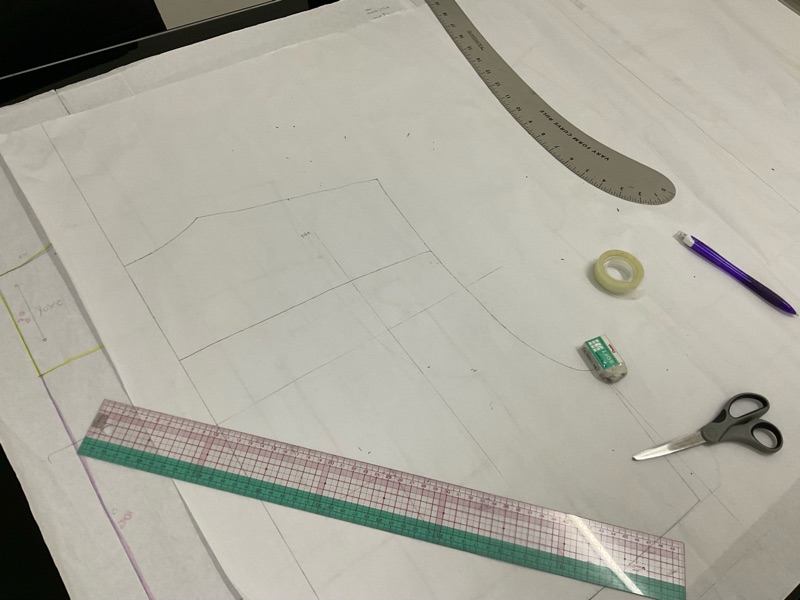
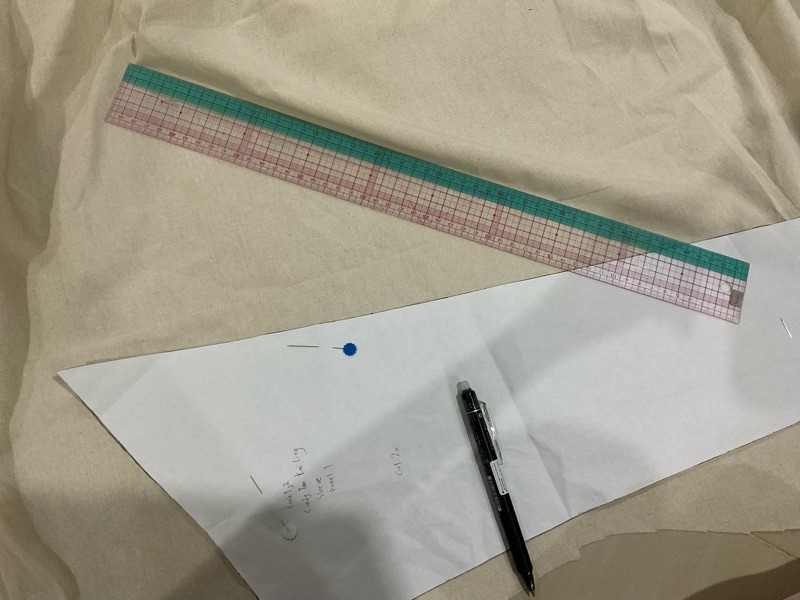
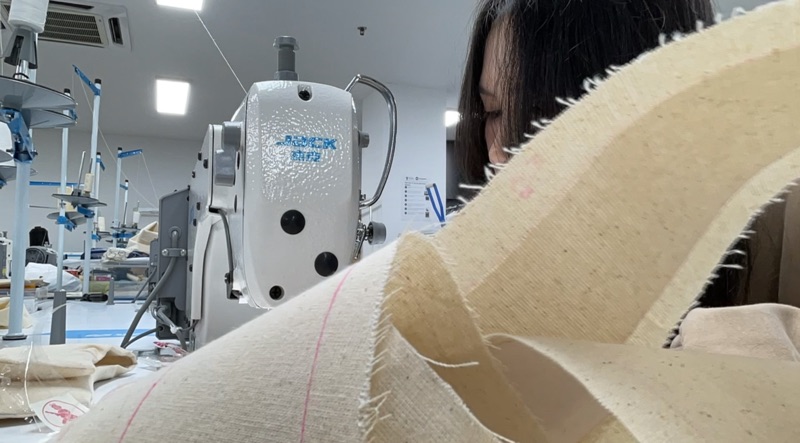
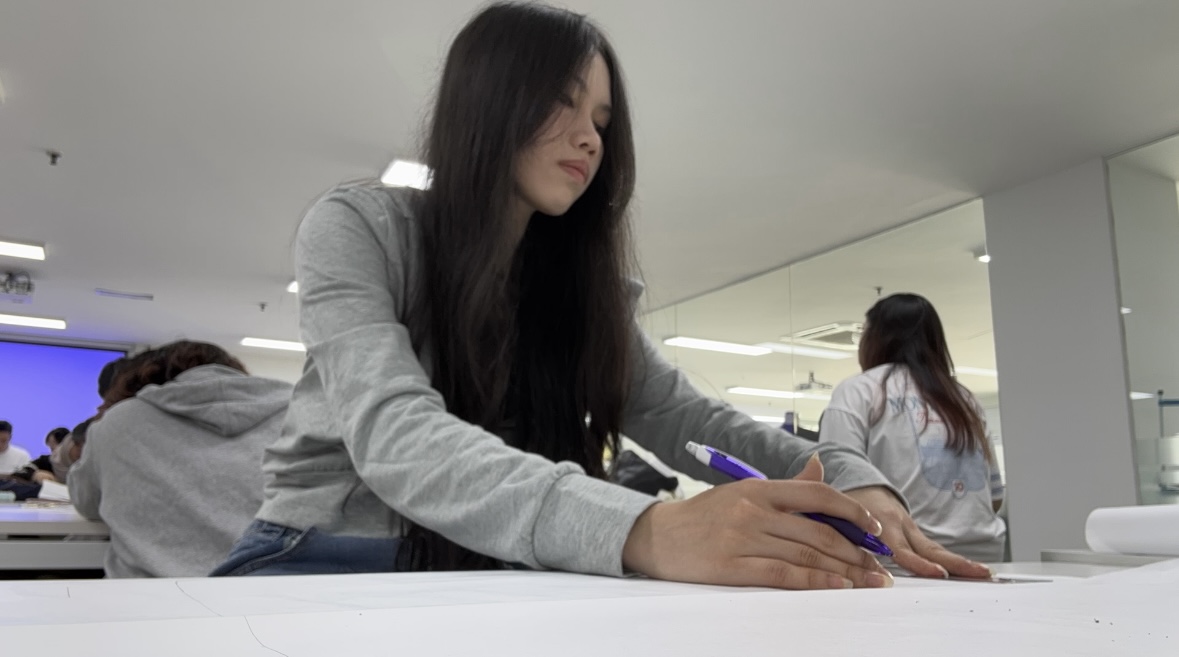
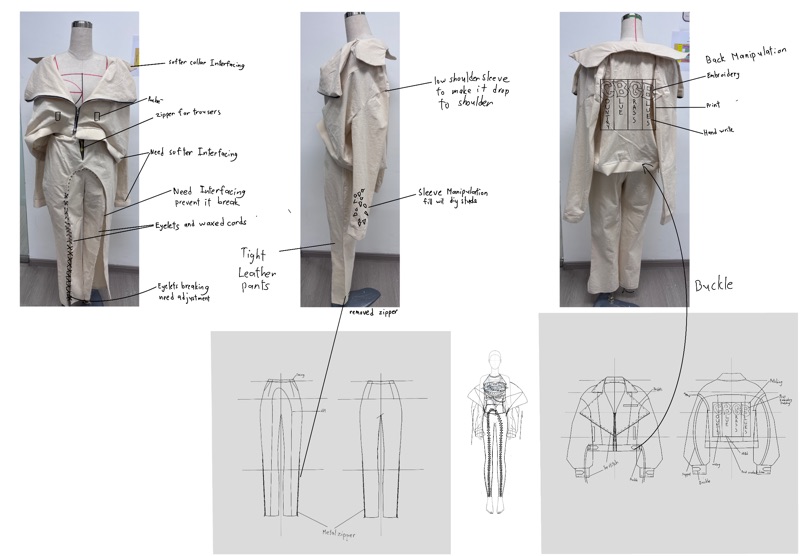
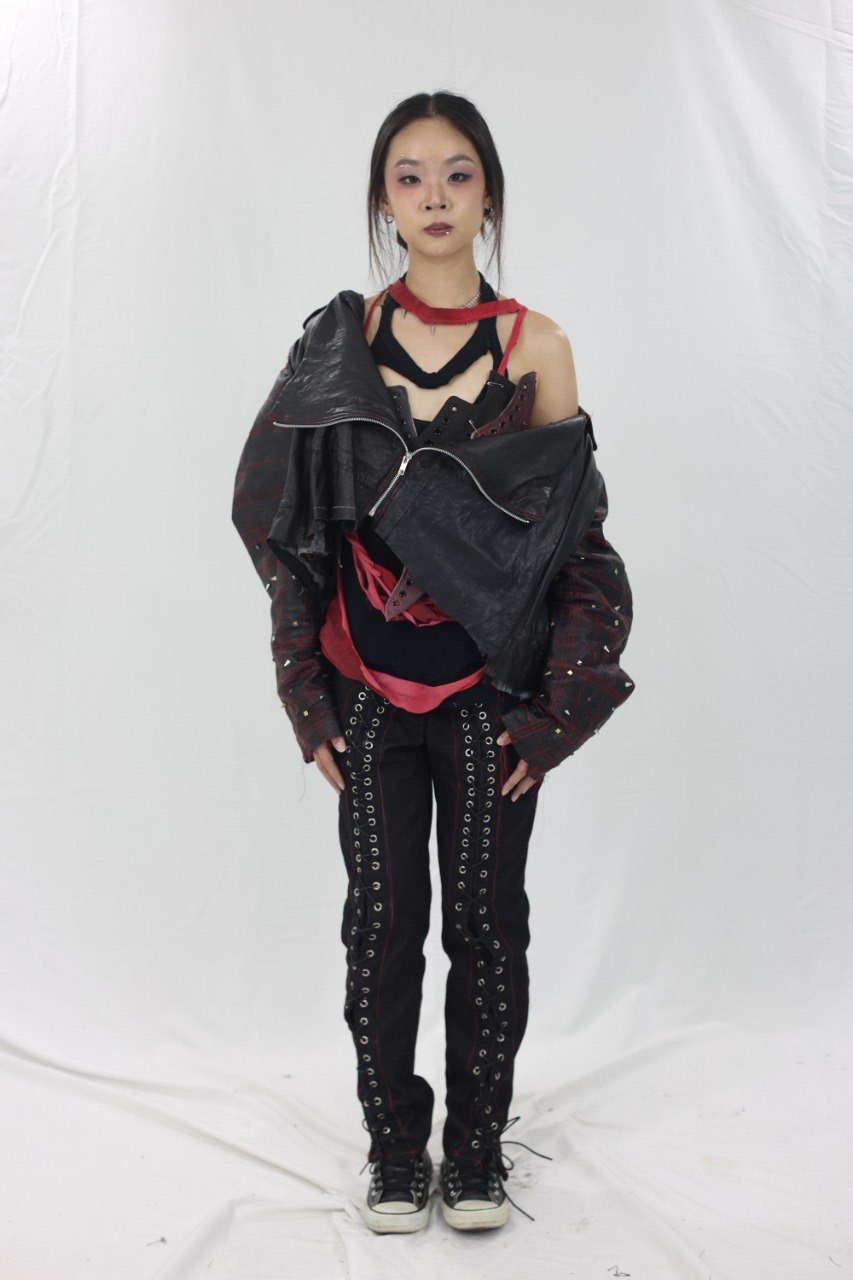
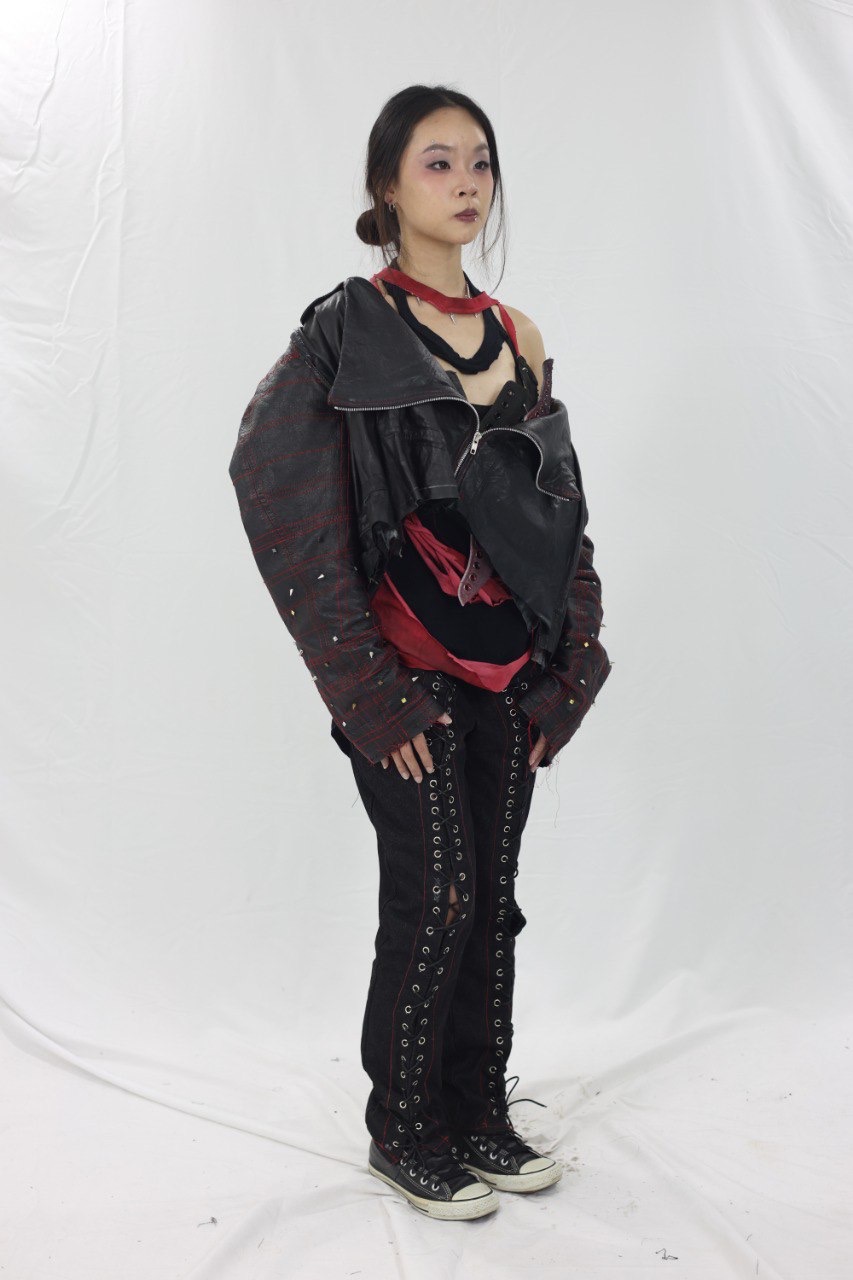
For Task 02, we were required to make a physical toile for our final garment. This task is linked to Fashion Project 2, but it focuses more on the technical side of pattern making rather than concept development. My design for this project is a jacket with two oversized collars and a pair of pants.
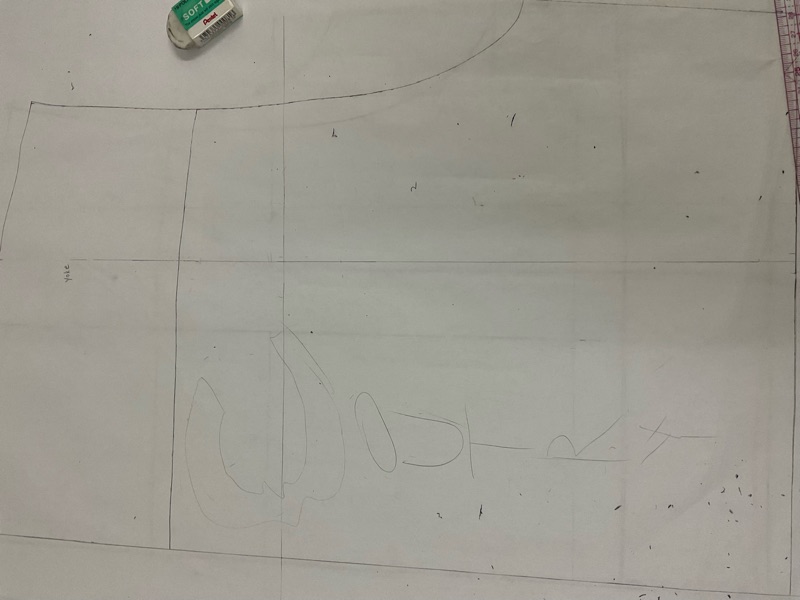
I started by creating patterns from basic blocks and then modifying them to achieve the design I wanted. This was honestly quite challenging because I kept getting the measurements and proportions wrong, especially for the collar and sleeves. Throughout this process, Dr. Alshaimaa and Ms. Melina helped me a lot, guiding me on how to correct the shapes and improve the fit.
After about a week of refining the patterns, I cut the toile using calico fabric and sewed it together. Once I finished the toile, I realised there were still problems. The jacket was not oversized enough, the sleeves needed to be bigger, and the pants zipper placement at the front looked awkward and affected the overall design. Because of this, I decided that the zipper would work better at the back. With further feedback from Ms. Melina and Dr. Alshaimaa, I refined the patterns again. After making these adjustments, the garment looked much closer to my original design intention and had a better overall fit.
Reflection
This task taught me that making a toile is not just a step to complete, but an important part of the design process. Seeing the garment in real form helped me understand what was wrong and what needed to be improved. Even though it was frustrating at times, the repeated corrections helped me learn more about pattern accuracy, fit, and proportion. After refining the toile, I feel more confident moving forward to produce the final actual look.
Final Project
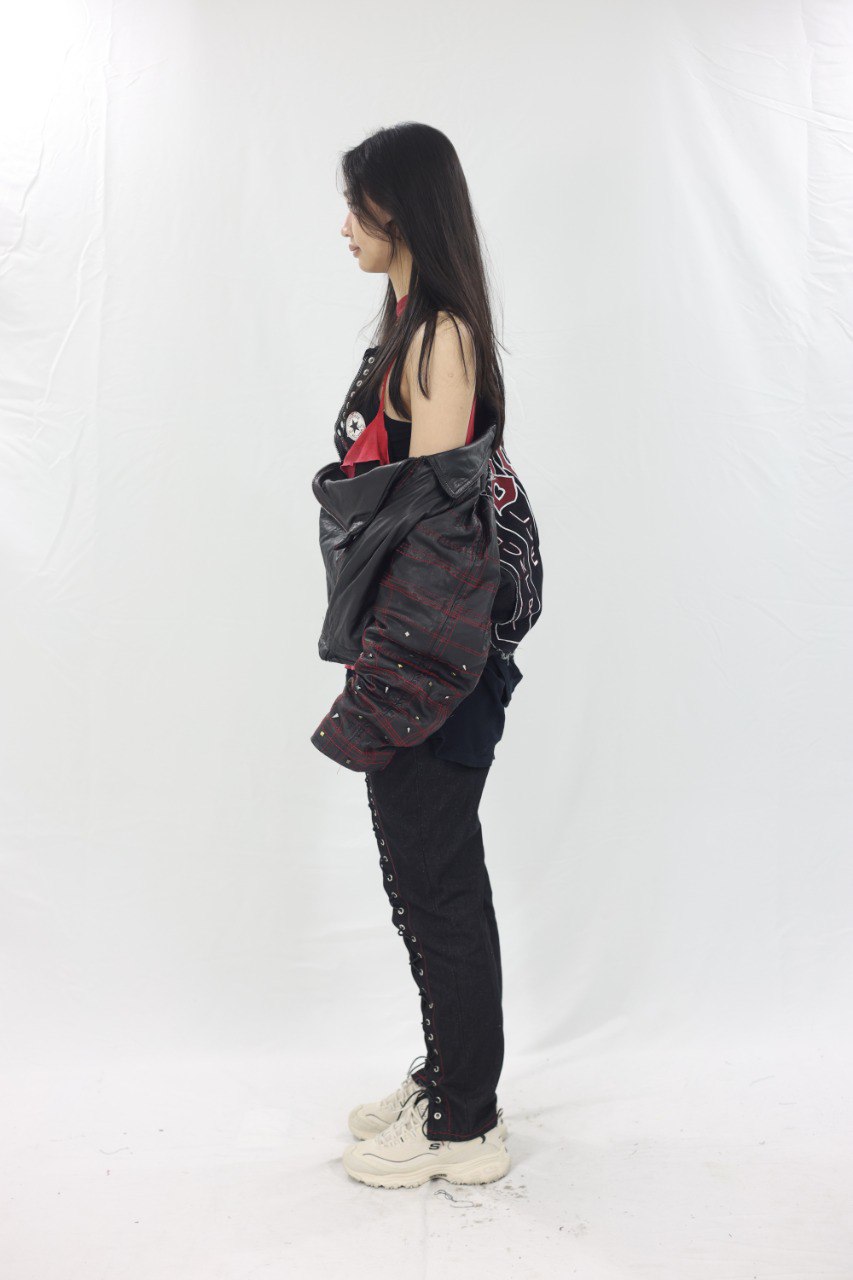
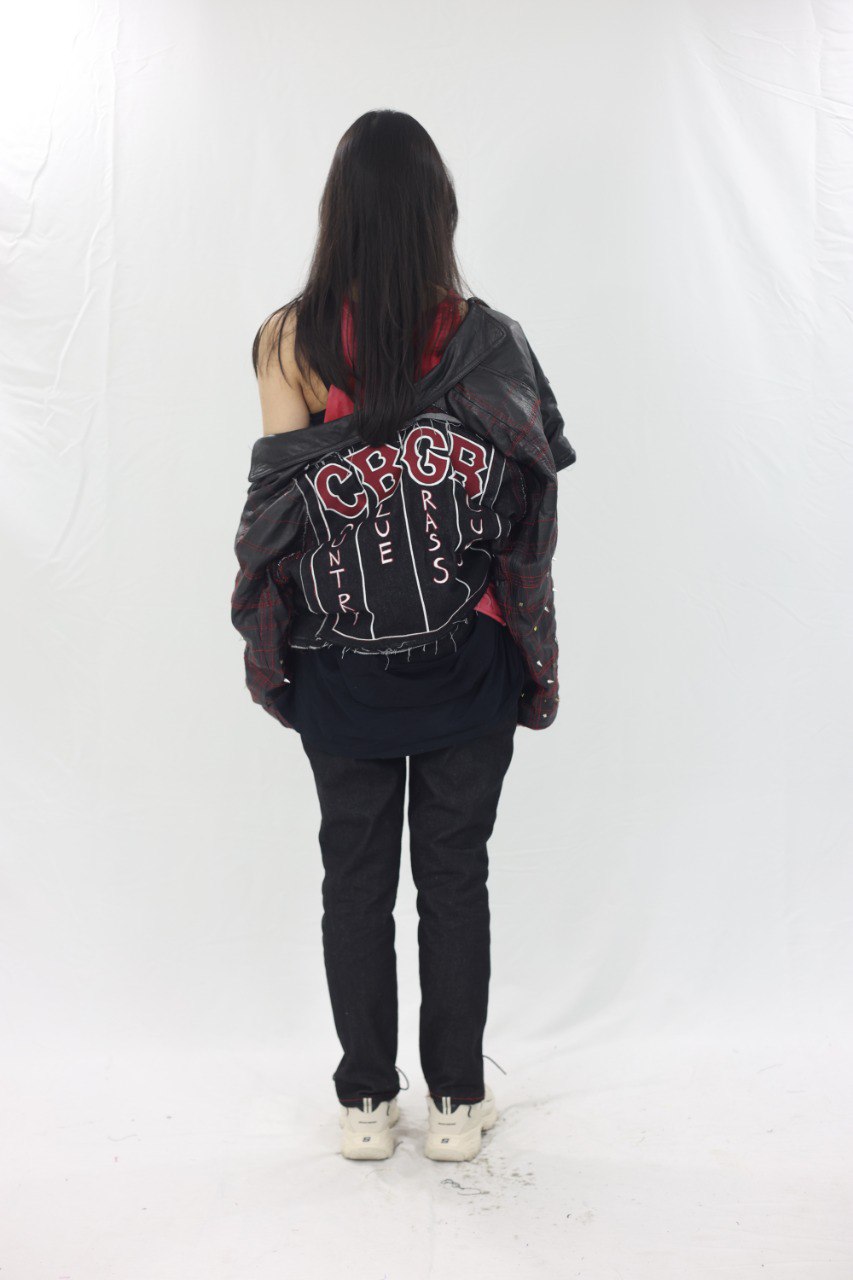
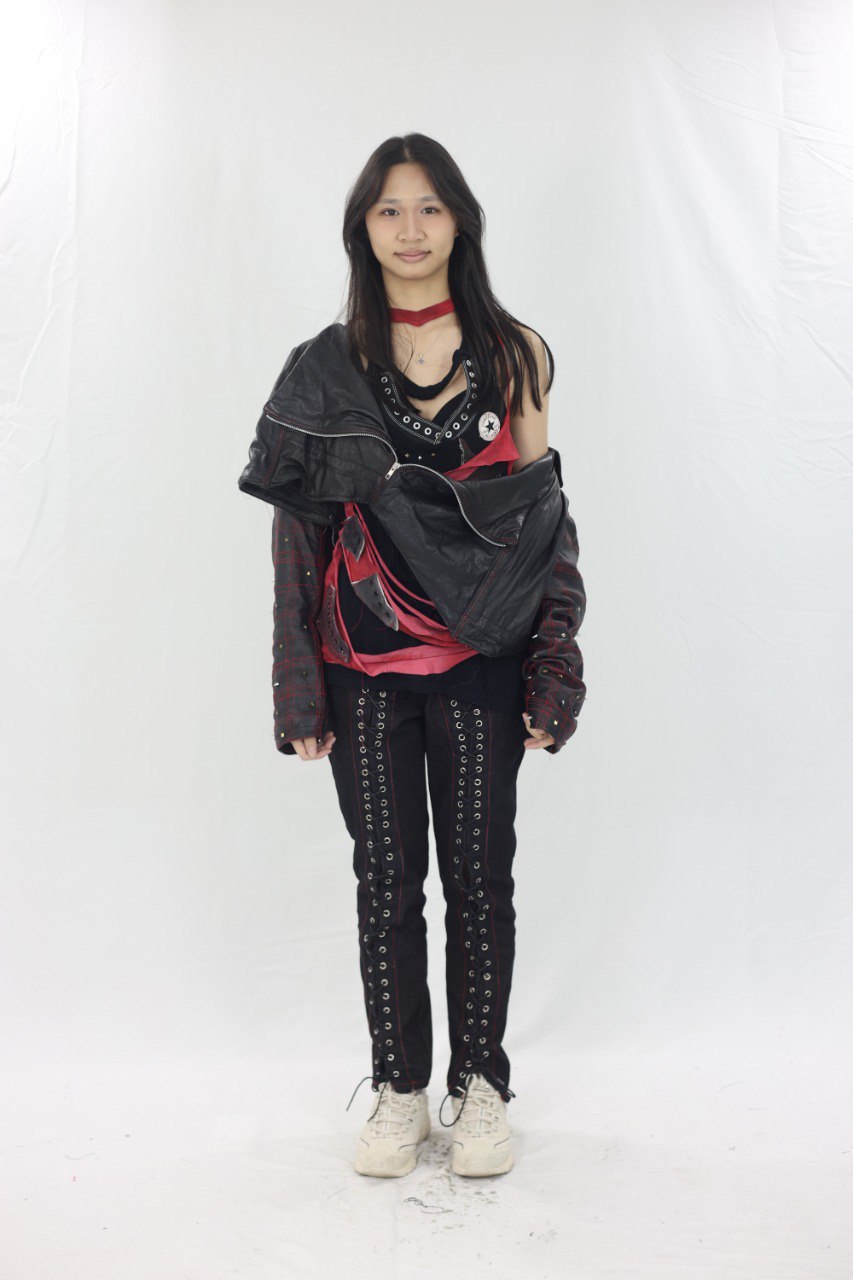
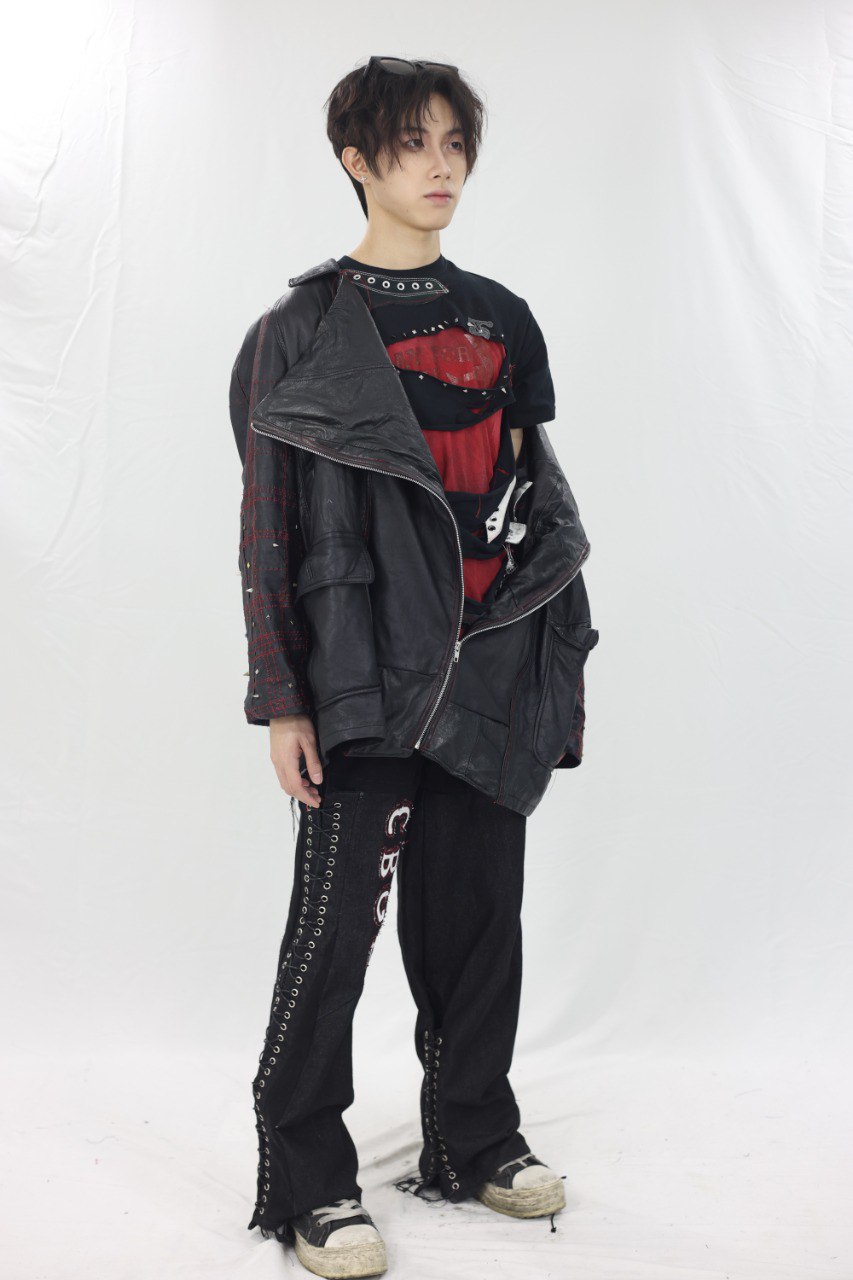
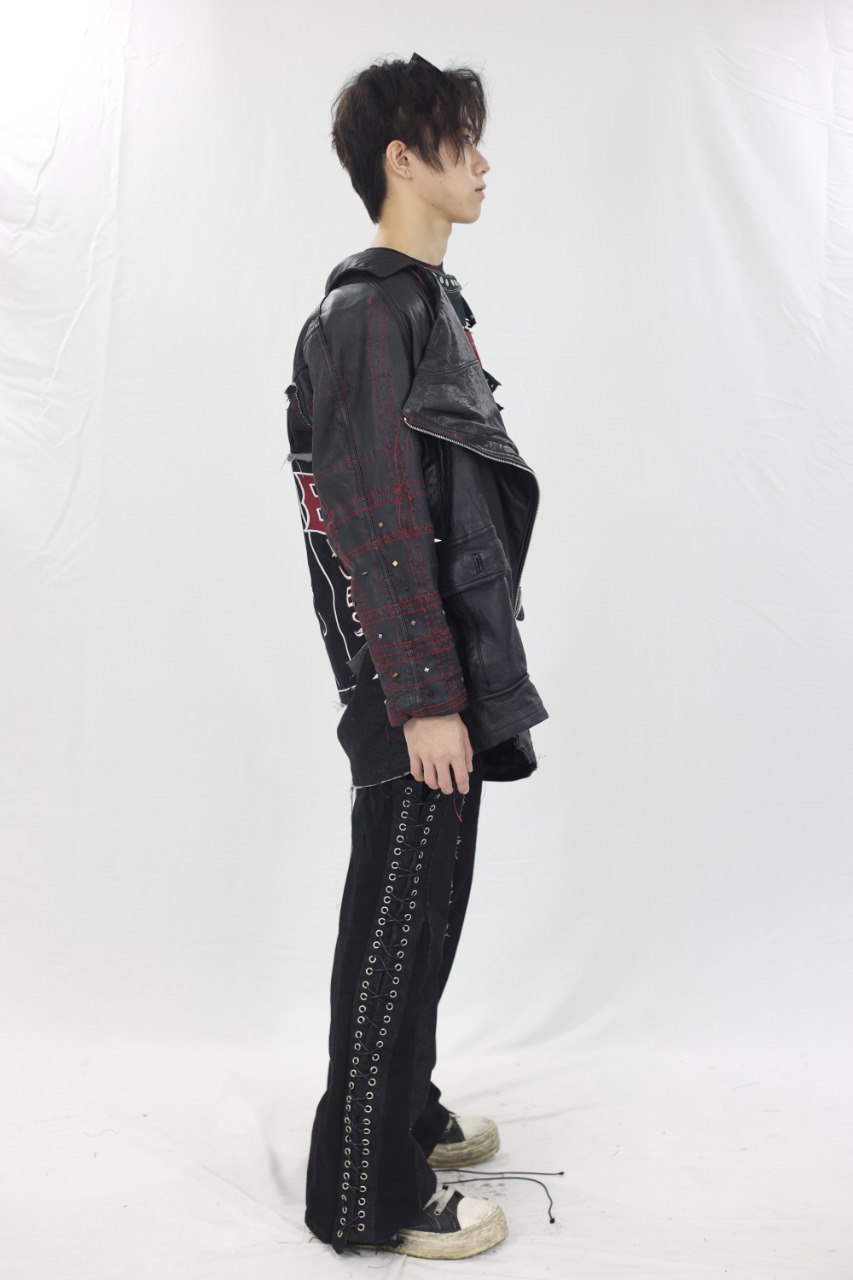
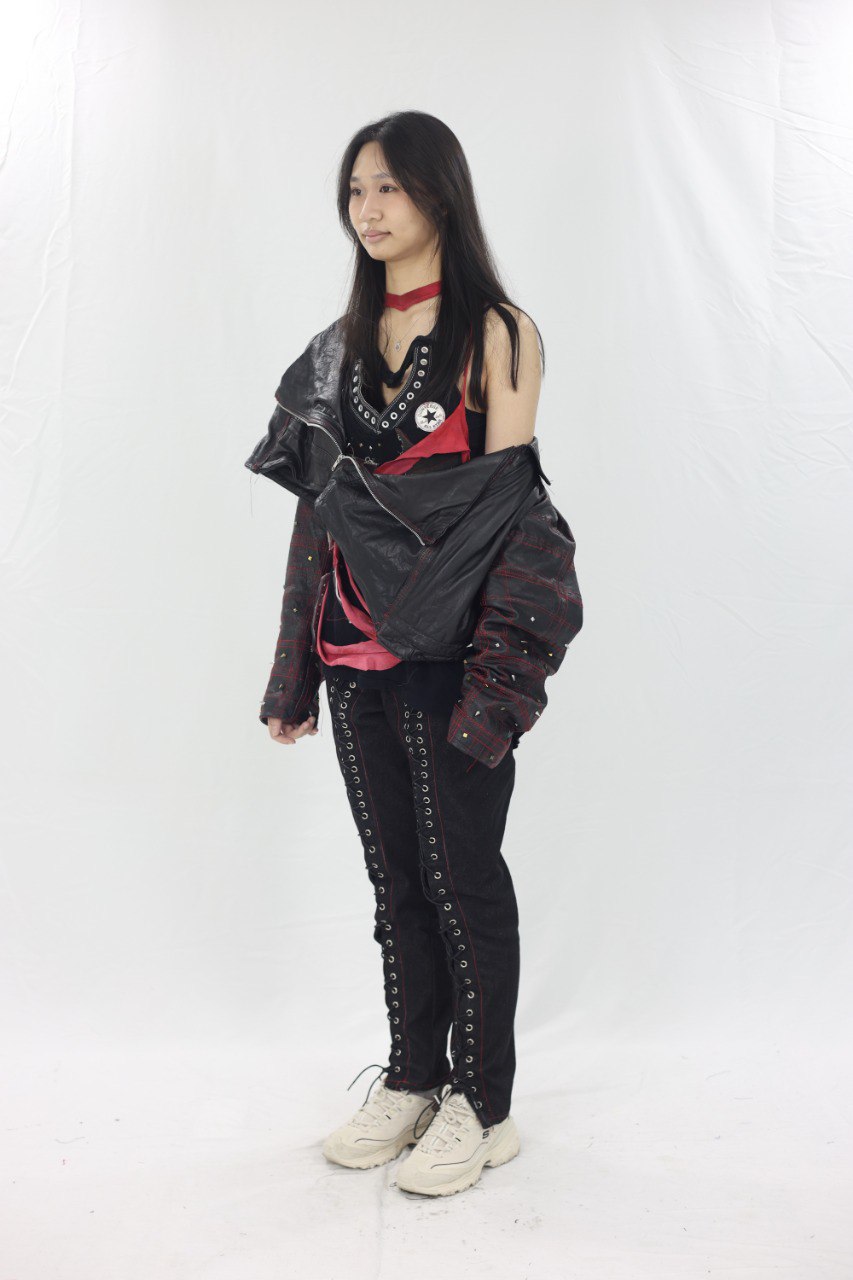
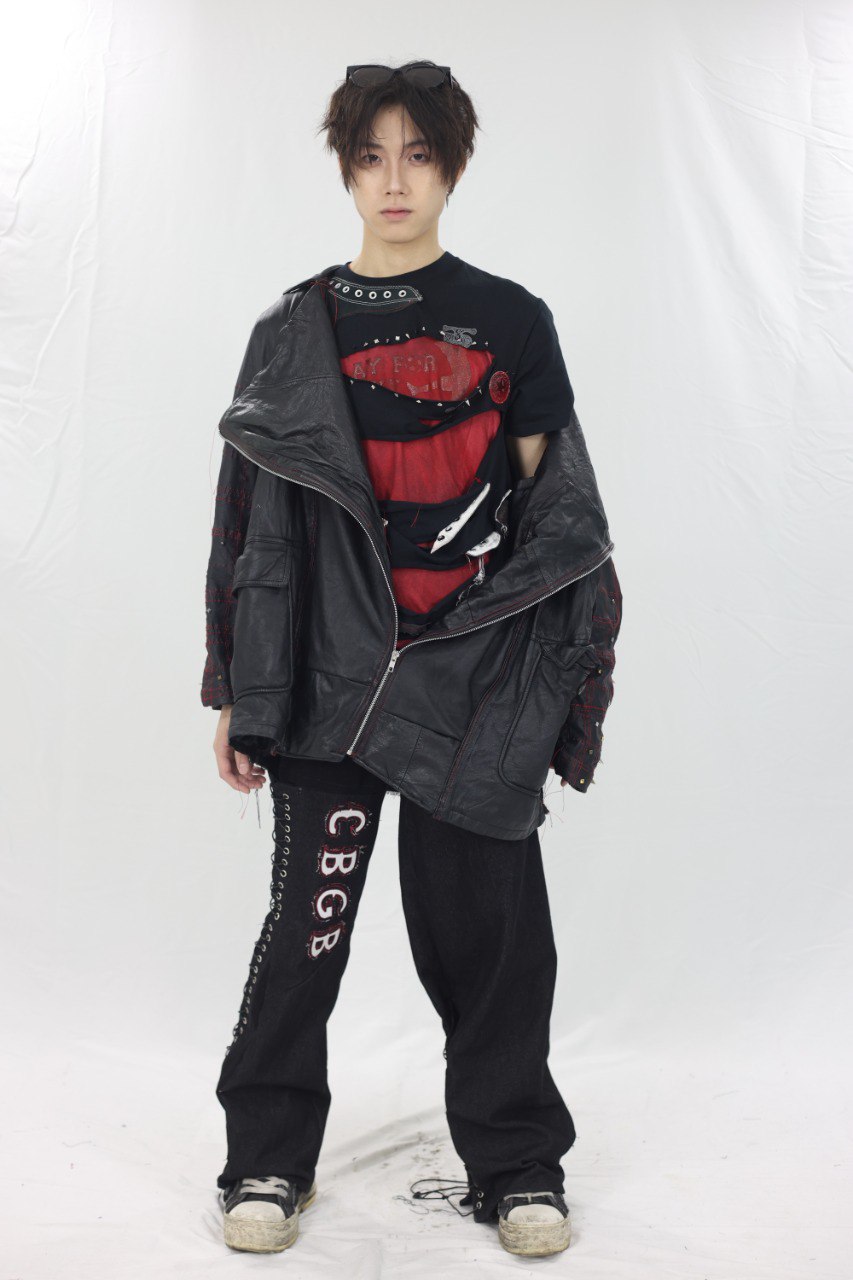
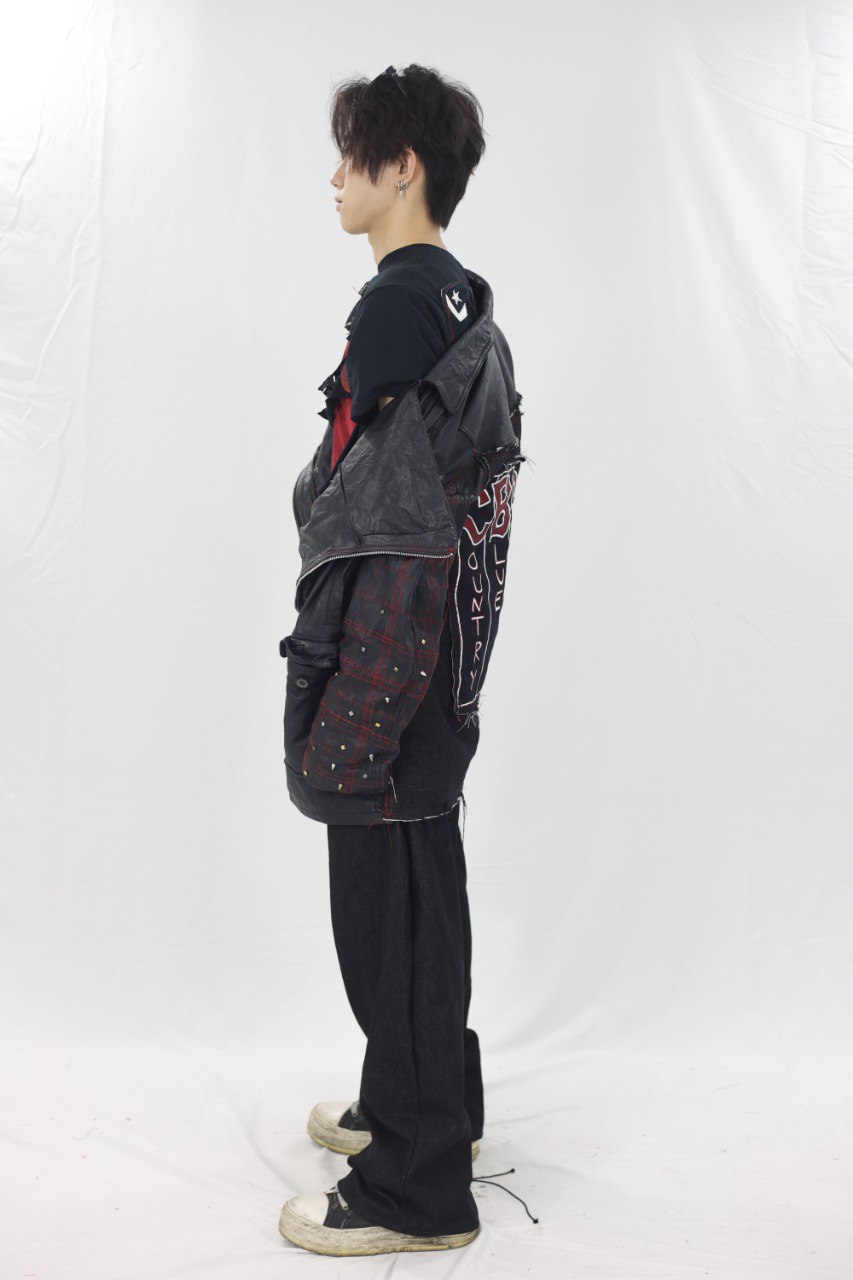
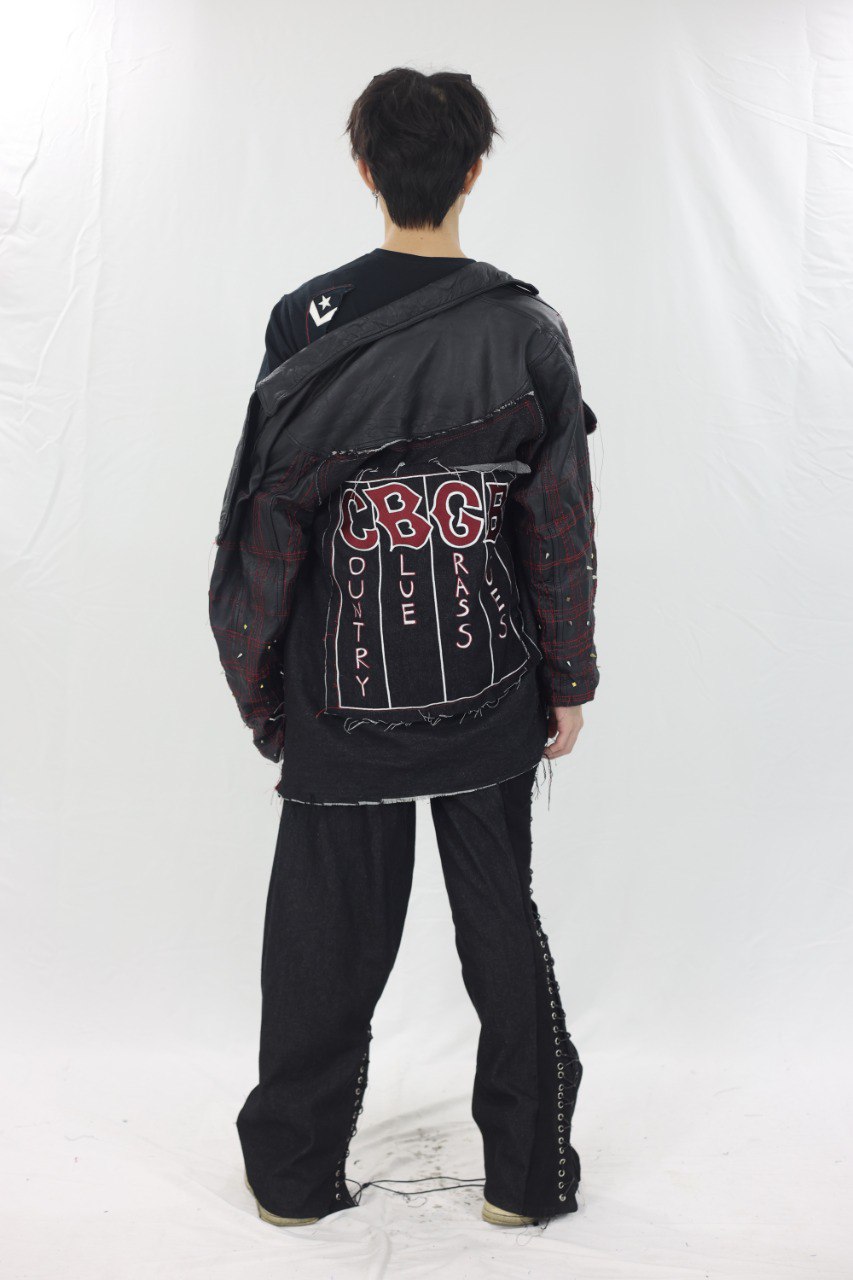
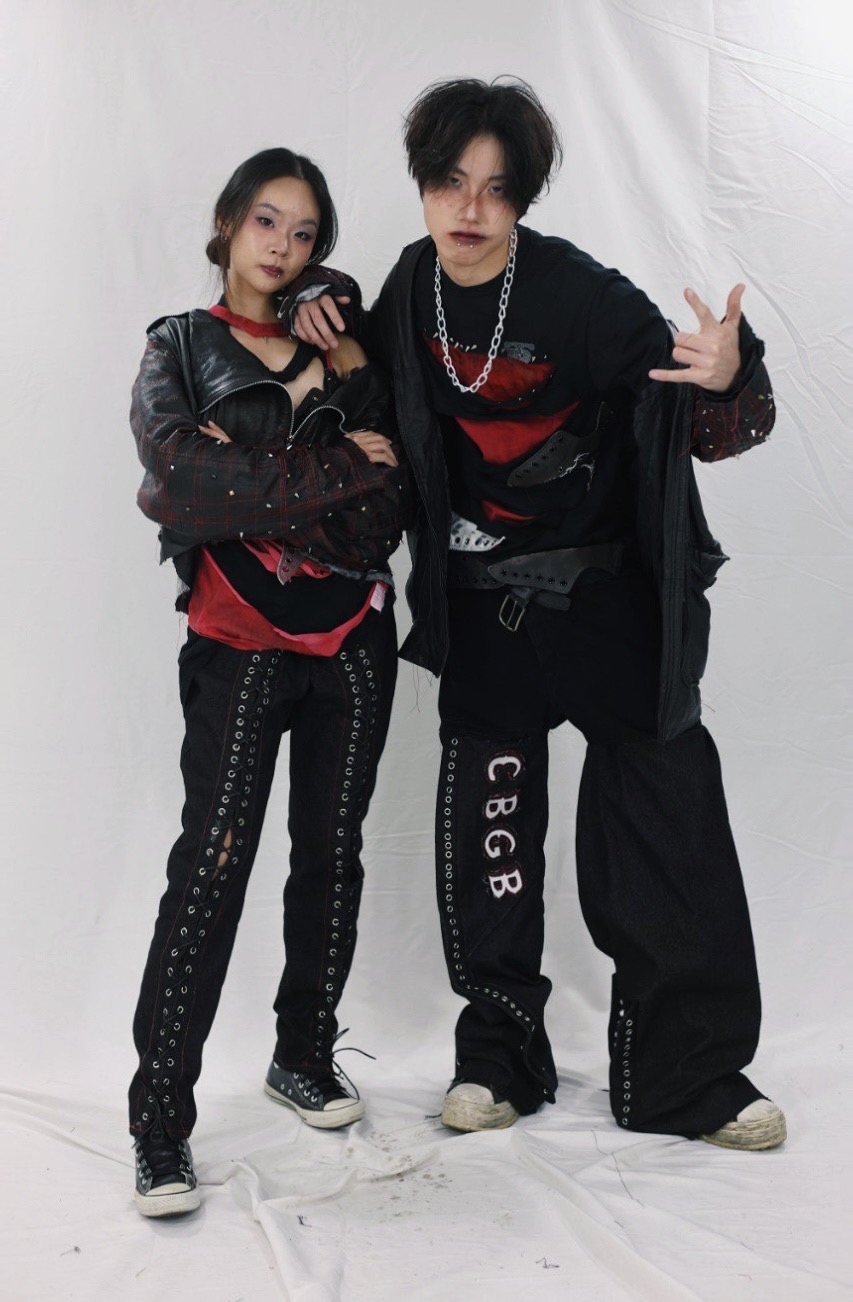
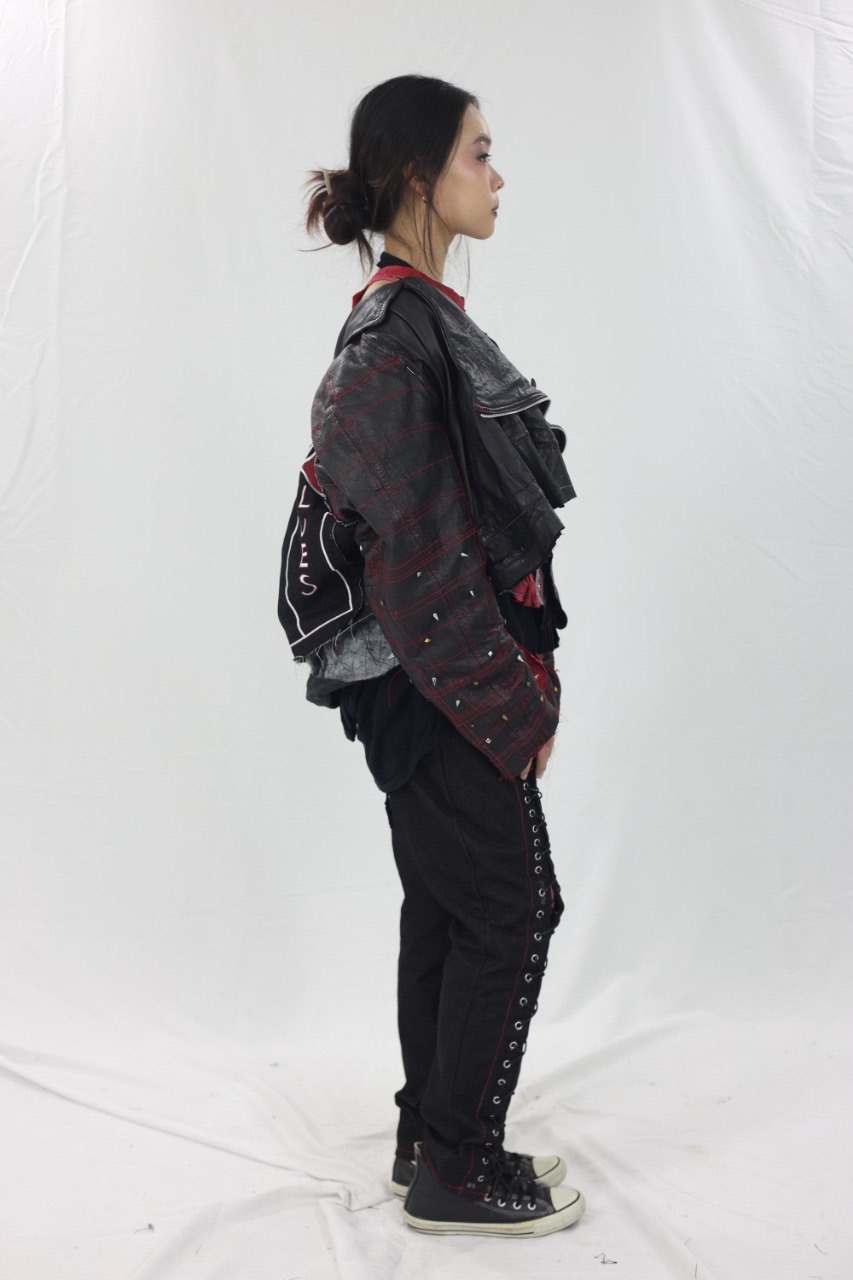
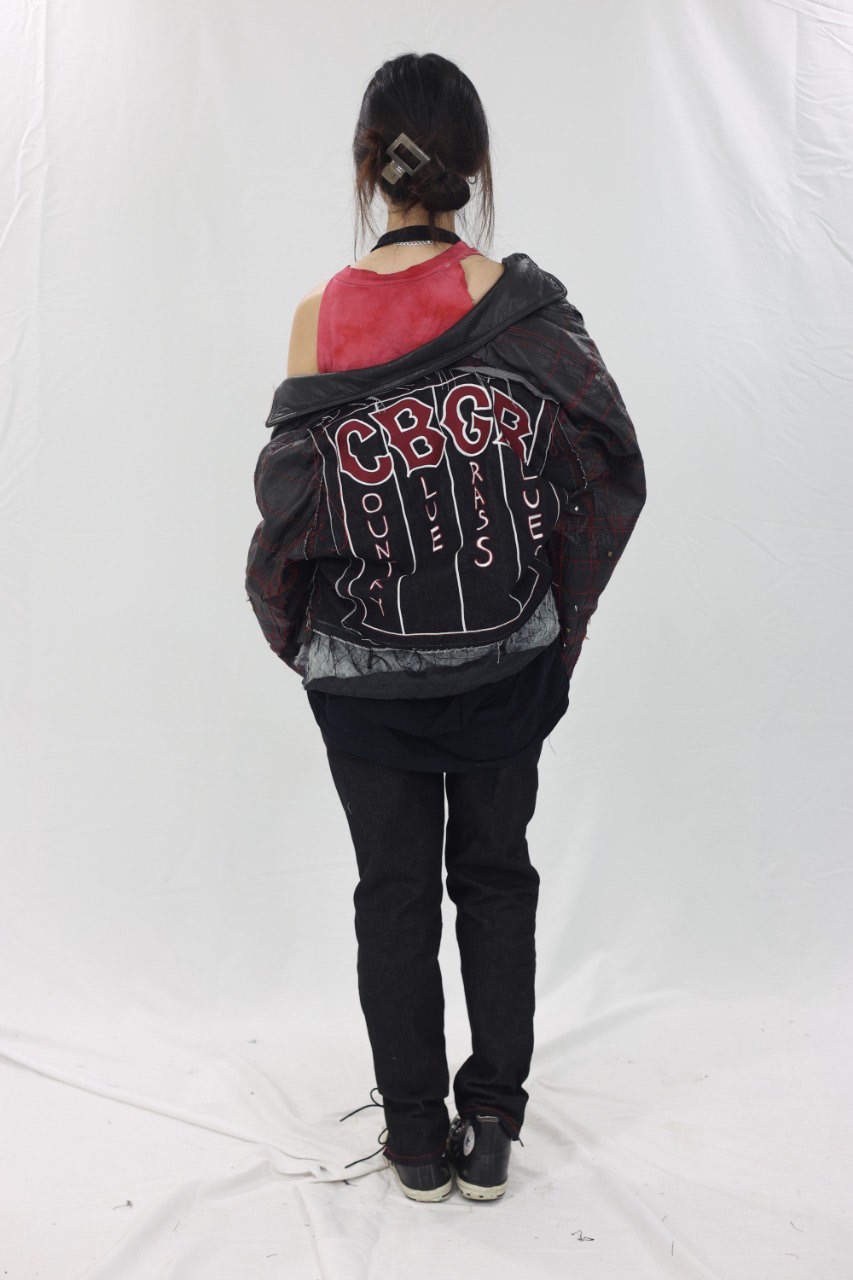
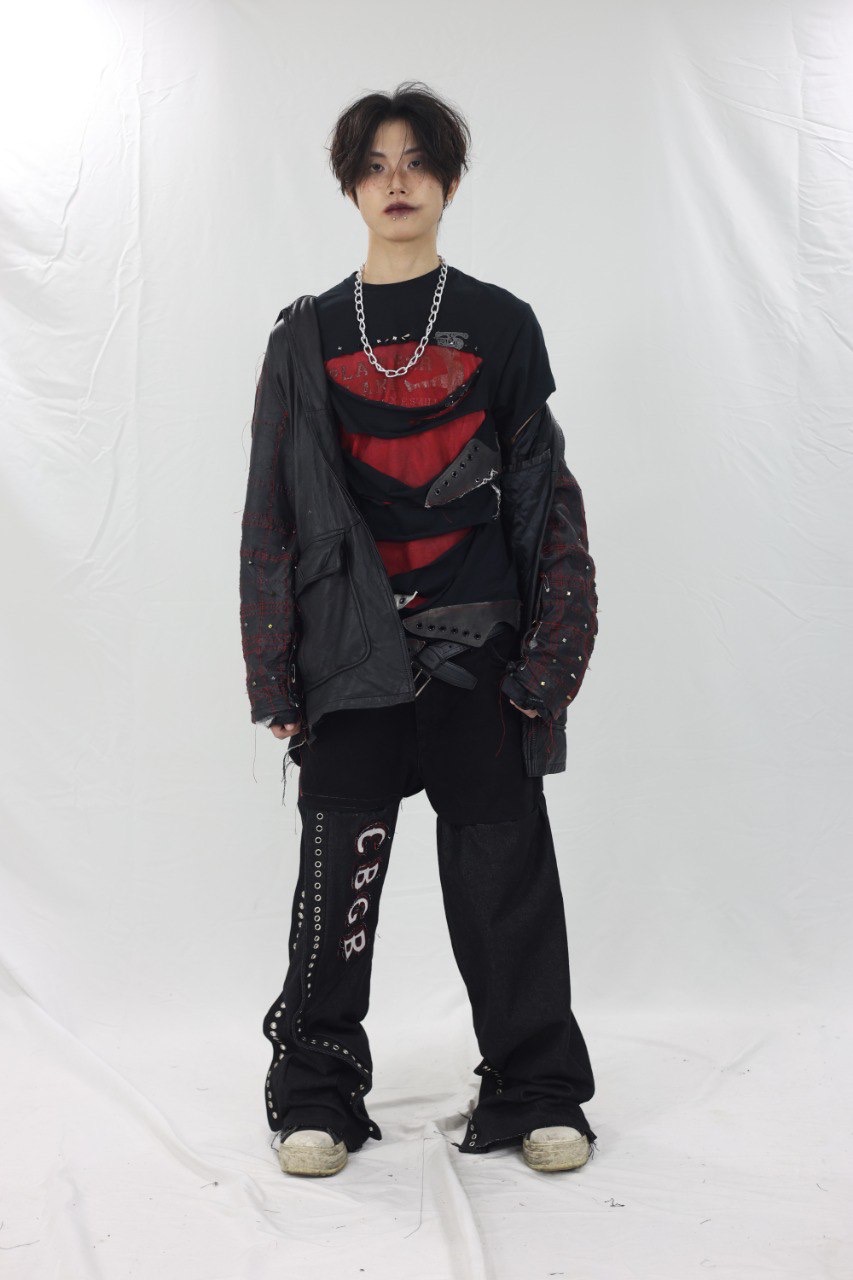
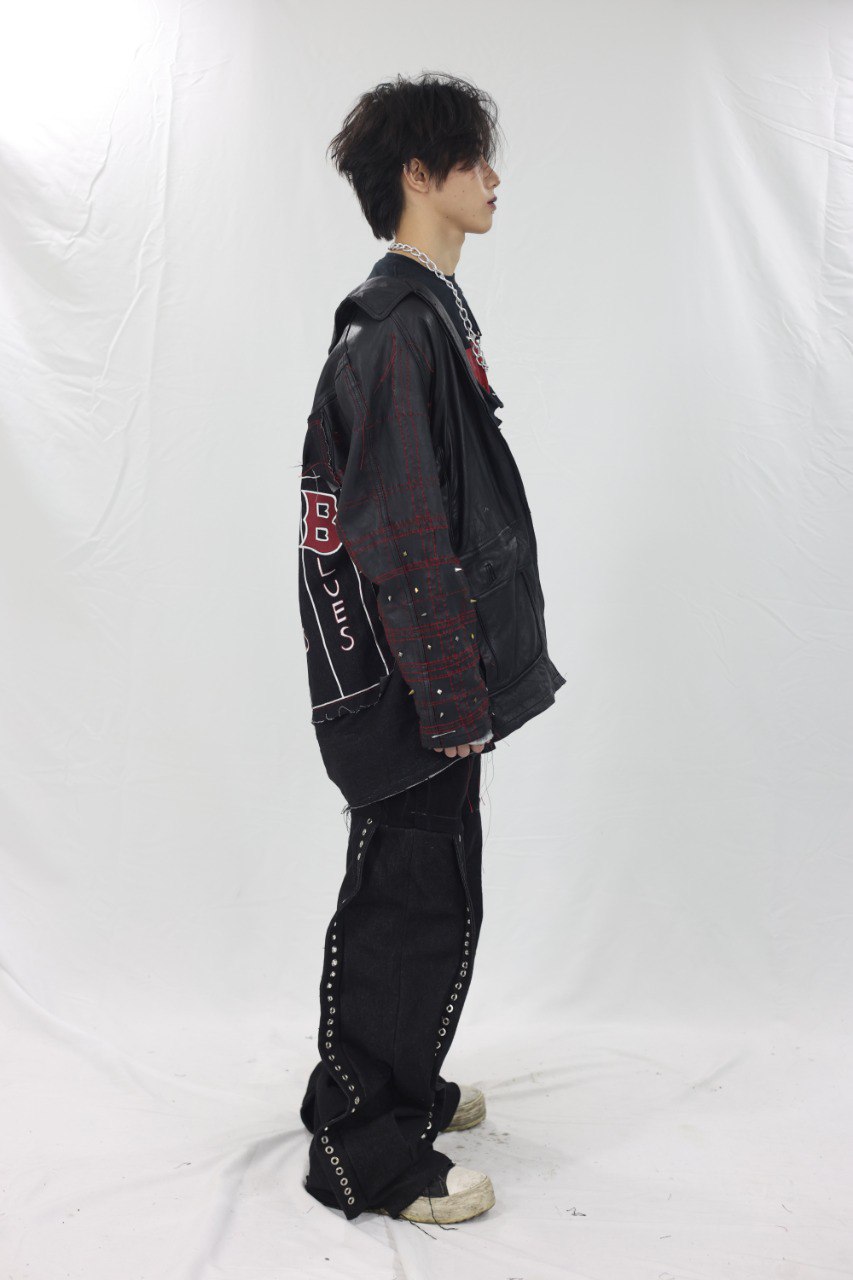
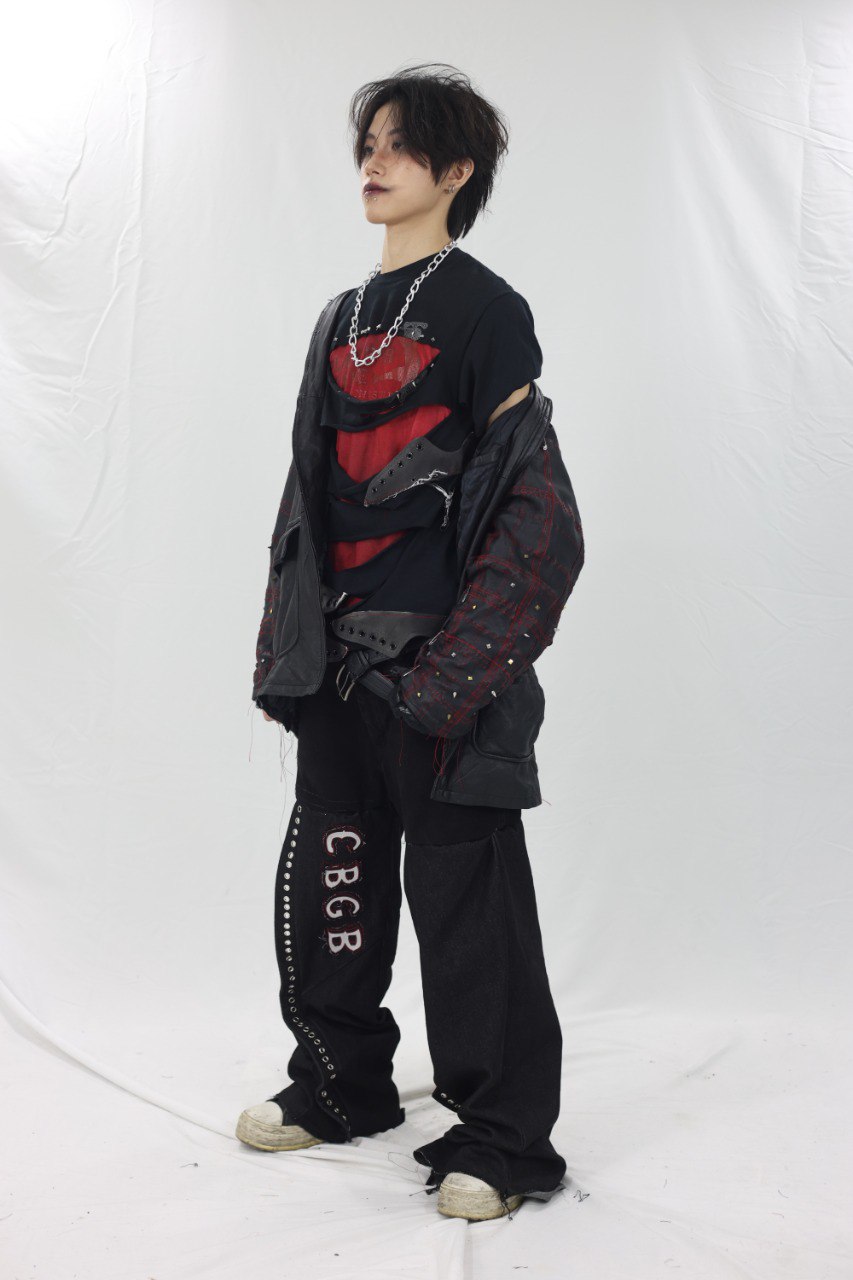
For Task 03, which is the final project, I carefully chose my materials. I used black denim for the pants, a thrifted leather jacket, and thrifted white T-shirts. I also designed my own embroidery and sent it to Dr Stitch to be embroidered.
I started with Look 1 pants. I didn’t start very late, but many problems came up. Both my own sewing machine and the studio machines had issues. The thread kept jumping, which made the stitching messy and uneven. Because of this, I was stuck on my pants for almost three weeks. I felt very stressed because time was running out, and honestly, I cried because it felt like everything was going wrong.
When I moved on to the leather, the same problem happened. The machine couldn’t handle the thickness, and the stitches kept skipping. After the heavy-duty machine was finally fixed, I started using it and the stitching became much neater. I managed to finish my pants, but I was already behind my original schedule.
After that, I continued by deconstructing the leather jacket and working on the fabric manipulations for Look 1 and Look 2, including the sleeve and back manipulations. I also continued refining my pants, spray-painted the shoes, and dyed the T-shirts. However, there was still not enough time to complete everything before the presentation.
Towards the end, I barely slept for several days trying to finish as much as I could. Unfortunately, my sewing machine broke at the very last minute, which made it impossible to fully complete the garments. Even so, I pushed myself to complete whatever I could within the limited time.
Reflection
This project was very exhausting both mentally and physically. It taught me that things don’t always go according to plan, especially when working with difficult materials like leather. I learned the importance of preparing earlier, managing time better, and being flexible when problems happen. Even though the final outcome was not exactly how I imagined, this experience helped me grow and better understand the reality of the fashion production processes.
Final Outcome
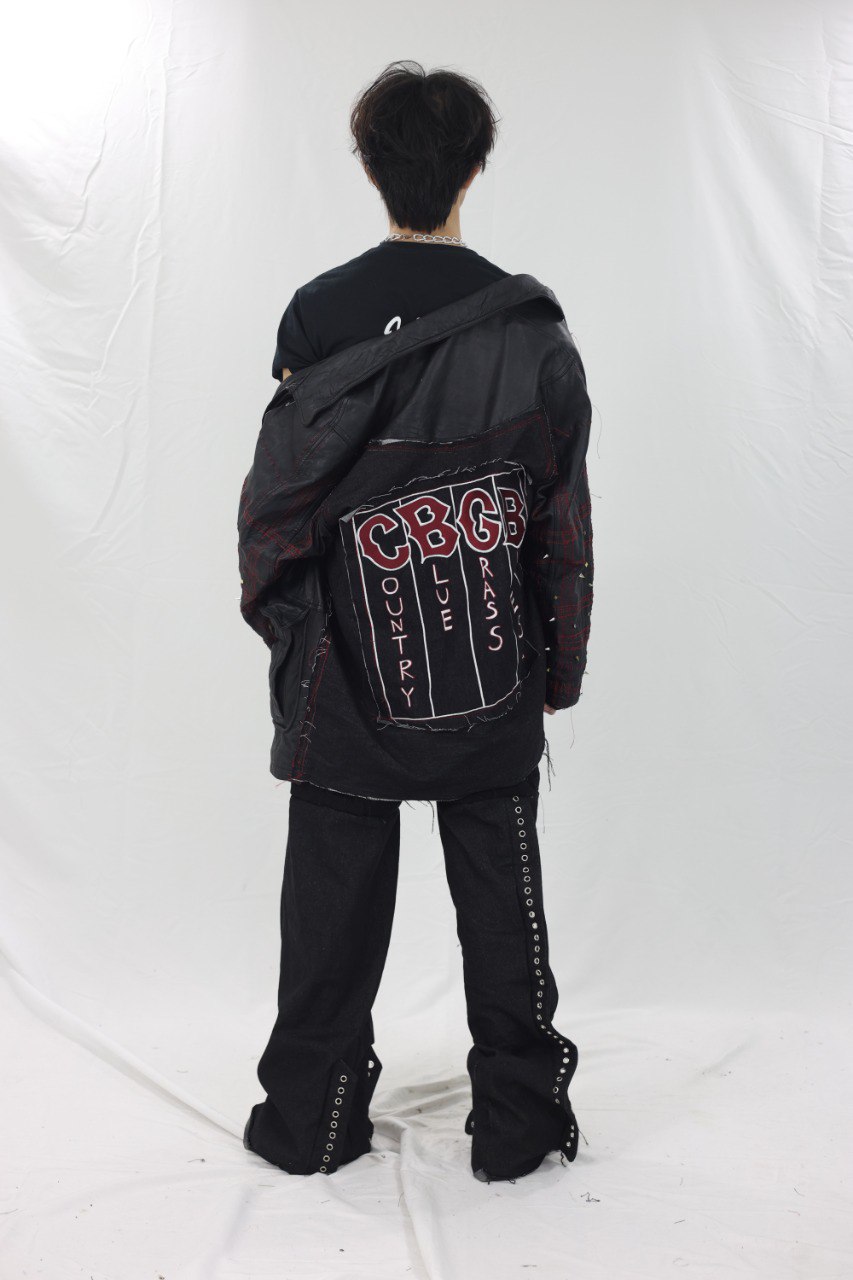 Updated Final Outcome